

Engines of Creation That Drive the Modern World
Modern Manufacturing Hubs Shape Global Economies, Labor Movements, and the Future of Production
The Evolution of the Global Factory
The rise of global manufacturing hubs is one of the most defining transformations of the modern economic era. From the smoke-filled workshops of the Industrial Revolution to the gleaming automated plants of the twenty-first century, manufacturing has evolved into a finely tuned global system. Each region that ascends to prominence in production reflects the balance between labor, capital, and technology. In the twentieth century, industrial power shifted from Western nations to Asia, where efficiency, cost advantages, and government-backed innovation redefined global competitiveness. Manufacturing hubs are more than clusters of factories; they are ecosystems of logistics, finance, human skill, and technological prowess. They bind cities, ports, and trade networks into a shared rhythm that sustains global supply chains. These hubs are the engines of growth that transform raw materials into livelihoods, propelling trade and shaping the destinies of nations. Understanding their rise and evolution reveals not just where goods are made, but how modern civilization sustains its economic heartbeat.
The Geography of Production and Its Shifting Centers
The distribution of manufacturing power has never been static. It has moved in waves, following opportunity, policy, and technological change. Western Europe and North America once dominated the industrial landscape, producing everything from machinery to textiles. As labor costs rose and markets expanded, production gravitated toward emerging economies. Japan, South Korea, and later China transformed themselves into industrial titans, reshaping global supply routes. China’s ascent as the “world’s factory” was not an accident but the result of strategic reforms, infrastructure investments, and integration into the global economy. Today, manufacturing diversification continues, with nations like Vietnam, India, and Mexico becoming pivotal players. The concept of nearshoring and friend-shoring reflects a new era where geography is once again redefined by politics and logistics. Companies seek stability, proximity, and resilience as global trade faces disruption. The geography of production is now a mosaic of regional networks, each connected through technology and trade agreements that keep goods flowing across continents.
The Economic Gravity of Manufacturing Hubs
Manufacturing hubs possess a magnetic pull that reshapes entire economies. They attract investment, stimulate job creation, and foster innovation through clustering effects. When industries concentrate in one region, they create symbiotic relationships among suppliers, logistics firms, and research institutions. This clustering amplifies productivity and drives technological diffusion. Cities like Shenzhen, Pune, and Ho Chi Minh City exemplify how manufacturing can transform local landscapes into global centers of commerce. The economic gravity of these hubs extends beyond production. They influence urban planning, education systems, and labor policies, ensuring that the workforce adapts to the demands of precision manufacturing and digital integration. As automation advances, the balance between employment and efficiency evolves, prompting nations to rethink how they define growth. While manufacturing drives prosperity, it also exposes vulnerabilities. Economic overdependence on a single sector or region can magnify shocks, as seen during global supply chain disruptions. The resilience of these hubs depends on their ability to innovate, diversify, and adapt to the shifting tides of globalization.
The Role of Technology in Redefining Manufacturing Power
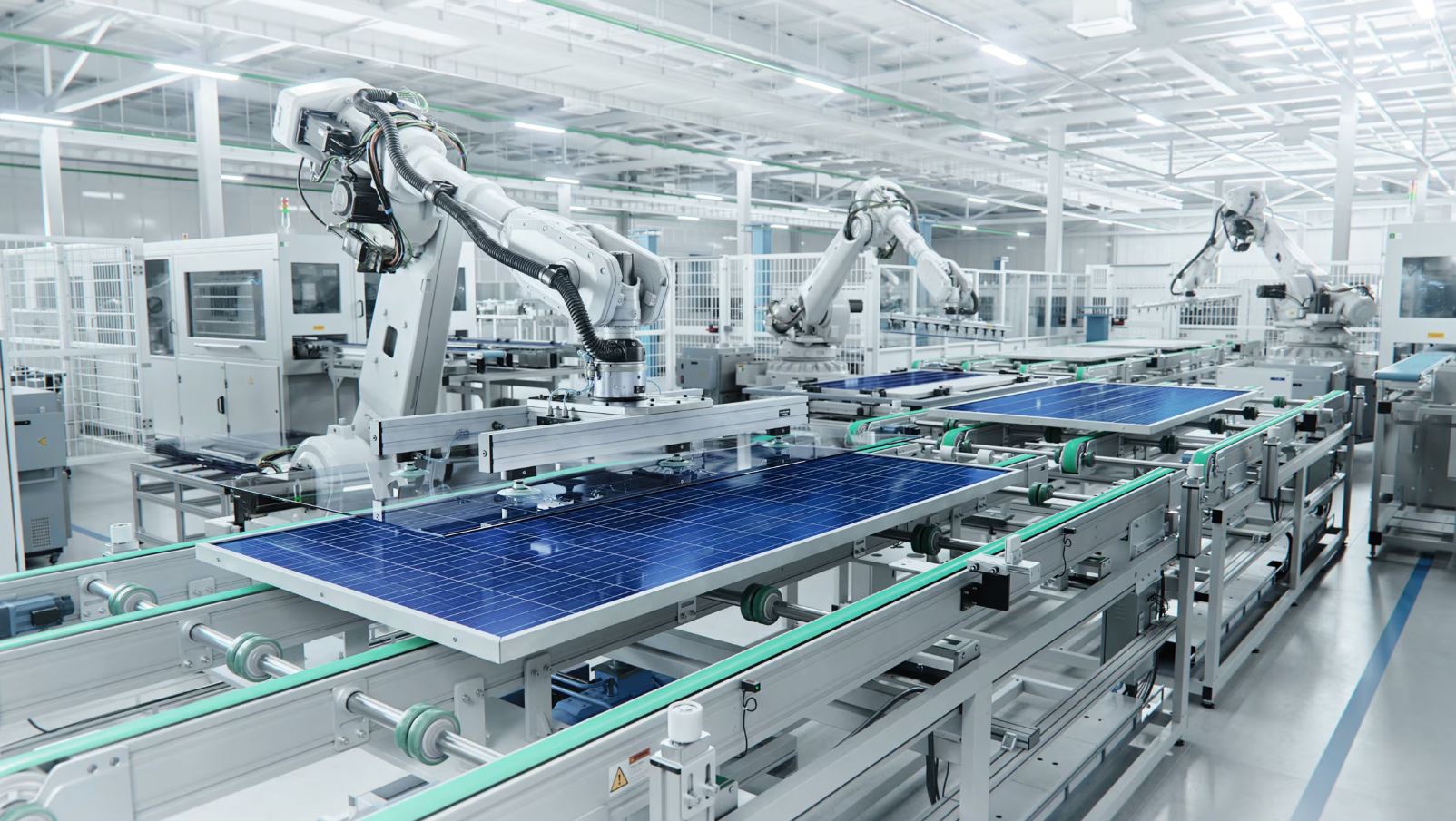
The digital revolution has rewritten the rules of manufacturing. Automation, robotics, and artificial intelligence now shape every stage of production, from design to delivery. Smart factories equipped with sensors and predictive systems operate with unprecedented precision and speed. Technologies such as additive manufacturing, or 3D printing, have reduced dependency on traditional mass production, allowing for customization at scale. Data analytics drive efficiency by optimizing supply chains and anticipating demand fluctuations. In this environment, the competitive advantage no longer rests solely on low-cost labor but on technological sophistication and adaptability. Nations that invest in digital infrastructure, research, and technical education position themselves as leaders in the next industrial era. However, the integration of technology introduces new inequalities. Regions that lack digital readiness risk exclusion from global manufacturing networks. The race toward Industry 4.0 is not merely about machinery; it is about the intellectual and digital capacity to sustain innovation. The technological frontier is now the new trade route of the twenty-first century.
The Human Dimension of Global Manufacturing
Behind every machine and every exported product stands the human element that fuels the global manufacturing system. Workers in assembly plants, engineers in design labs, and logistics professionals in ports form the living network that connects economies. The nature of labor within these hubs has evolved dramatically. Once characterized by repetitive manual work, modern manufacturing increasingly demands technical skills, problem-solving, and digital literacy. Yet, this transformation is uneven. While some regions embrace workforce development and fair labor practices, others struggle with exploitation, unsafe conditions, and wage inequality. The human dimension of global manufacturing is both a triumph and a challenge. It embodies the aspirations of millions who find empowerment through industrial employment, but it also reflects the persistent imbalances that globalization has yet to resolve. The future of work in manufacturing will depend on education, equity, and the capacity of societies to integrate automation without leaving people behind. True progress in manufacturing is measured not by output alone, but by the dignity and opportunity it offers to those who sustain it.
The Environmental Equation in Industrial Growth
Manufacturing hubs are not only centers of progress but also sources of environmental impact. Industrialization has historically been associated with pollution, resource depletion, and carbon emissions. As climate awareness grows, the global manufacturing sector faces increasing pressure to operate sustainably. The transition to green manufacturing involves adopting cleaner energy sources, recycling waste materials, and minimizing environmental footprints through circular economy principles. Renewable energy integration, eco-friendly materials, and efficient logistics are becoming defining features of responsible production. Governments and corporations alike are setting ambitious targets for carbon neutrality, driving innovation in sustainable processes. The emergence of green industrial zones demonstrates a paradigm shift where profitability aligns with environmental stewardship. Yet, the transition is far from complete. The cost of sustainable transformation remains a barrier for many developing economies, where immediate growth often outweighs long-term ecological goals. The environmental equation in manufacturing underscores a universal challenge: reconciling progress with preservation, ensuring that industrial ambition does not come at the expense of planetary well-being.
The Geopolitics of Industrial Dominance
Manufacturing hubs are strategic assets in the global balance of power. They influence trade relations, supply chain resilience, and national security. Control over critical industries, such as semiconductors and rare earth processing, grants countries leverage in international diplomacy. The rivalry between major powers increasingly centers on industrial capacity rather than military might. Trade wars, tariffs, and sanctions have revealed the fragility of global interdependence. Nations are reevaluating their reliance on foreign production, seeking self-sufficiency in key sectors through reshoring and strategic partnerships. The rise of regional manufacturing alliances signals a shift toward multipolar industrial competition. At the same time, developing nations use industrialization as a tool for geopolitical relevance, leveraging manufacturing growth to attract investment and strengthen diplomatic ties. The geopolitics of industry intertwine economics with sovereignty. The ability to manufacture is not merely an economic advantage but a statement of independence. The future of global manufacturing will depend on how nations navigate this intricate landscape of cooperation, competition, and control.
The Future of Manufacturing Hubs in a Fragmented World
The world stands at a crossroads where globalization and localization coexist in delicate balance. The manufacturing hubs of tomorrow will be defined by resilience, adaptability, and sustainability. Automation and artificial intelligence will reshape traditional hierarchies, enabling smaller nations to compete through innovation rather than scale. Decentralized production models, driven by technology and regional partnerships, will reduce dependence on single-source supply chains. The concept of the megafactory may give way to interconnected micro-hubs that operate autonomously yet collaboratively across continents. Sustainability will no longer be optional but integral, as consumers and regulators demand transparency in production practices. Education systems will evolve to nurture a workforce capable of merging human creativity with machine precision. The future of manufacturing is not solely about efficiency but about purpose, building industries that align with social and environmental goals. As the world grows more fragmented politically and environmentally, manufacturing hubs will serve as bridges of continuity, sustaining global collaboration even in times of uncertainty.
The Enduring Rhythm of a Connected World
Manufacturing hubs are the pulse points of the modern economy. They reflect humanity’s ingenuity, ambition, and interdependence. Every product that crosses an ocean or borders carries the story of countless people, decisions, and innovations. In an age defined by volatility and transformation, these industrial ecosystems remain symbols of resilience. They prove that collaboration across borders can still yield prosperity and progress. The challenge ahead is to ensure that the rhythm of global manufacturing continues not through exploitation but through balance, between people and machines, growth and sustainability, efficiency and empathy. As new hubs emerge and old ones reinvent themselves, the essence of manufacturing remains timeless: the act of shaping the material world to meet human need. In that shared pursuit, nations find not only economic vitality but a reminder of what truly connects them, the capacity to create, adapt, and build the future together.