

Resilience Built Across Oceans and Borders
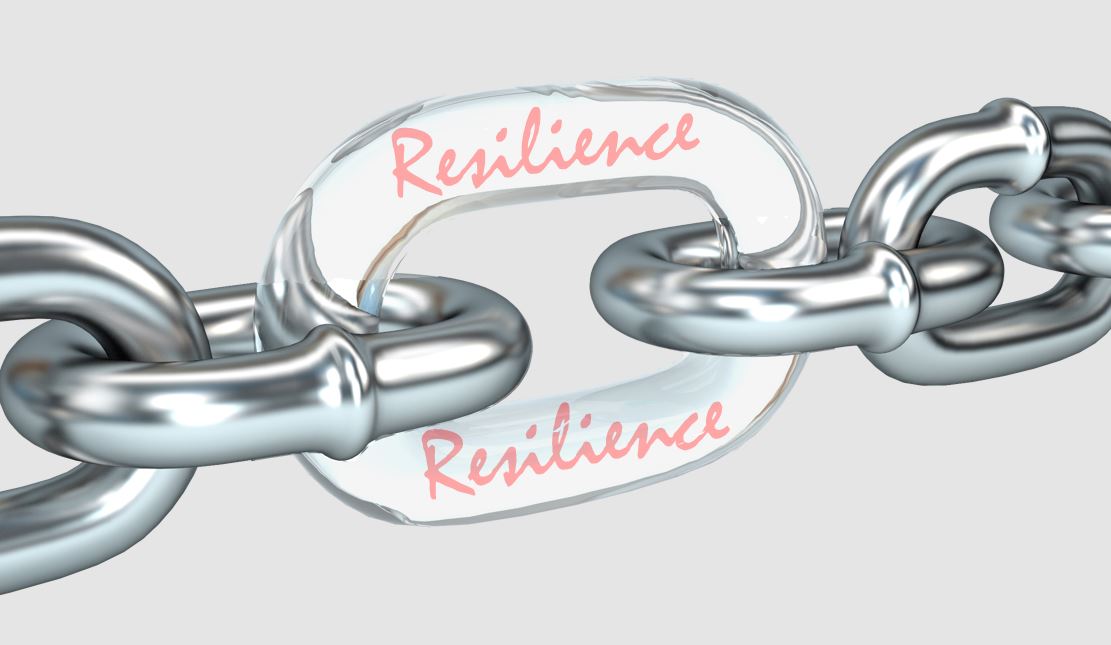
Modern Supply Chains Adapt, Reinvent, and Endure in a World of Constant Disruption
The Invisible Arteries of the Global Economy
Every product that reaches a shelf, factory, or home travels through a web of connections that remains largely unseen yet deeply vital. These networks of logistics, production, and coordination form the supply chains that sustain modern life. From semiconductors powering smartphones to wheat crossing continents to feed millions, each link is a testament to collaboration across borders. Yet, what was once considered routine has become a strategic concern. Events in recent years have revealed how fragile these systems can be when struck by sudden shocks. A ship wedged in a canal, a virus spreading across continents, or a political conflict can halt the flow of goods and ripple through economies. The concept of resilience in supply chains has therefore evolved from a technical exercise to a cornerstone of global security. It embodies more than risk management; it is the art of sustaining movement in a world of uncertainty. Behind every steady delivery lies an intricate story of preparation, flexibility, and trust, woven by companies determined to keep the world connected.
The Lessons of Fragility and Recovery
The disruptions that began in the early 2020s exposed how dependent the world had become on linear, efficiency-driven systems. Globalization had created vast networks optimized for speed and cost, but not for adaptability. When manufacturing hubs closed or shipping lanes jammed, those finely tuned chains faltered. Recovery efforts illuminated the need for diversification, redundancy, and visibility. Businesses realized that resilience does not mean avoiding disruption but absorbing and adapting to it. After every shock came an opportunity to rebuild smarter. Manufacturers began reexamining supplier bases, governments reassessed strategic reserves, and logistics firms invested in predictive technology. The lessons were costly but transformative. Supply chains learned to anticipate, not just react. Flexibility became as valuable as efficiency, and foresight replaced complacency. The world’s interconnectedness, once seen as vulnerability, was reimagined as strength when guided by better balance. Fragility taught resilience, and recovery became a shared language across industries striving for stability without sacrificing progress.
The Rise of Digital Visibility in Logistics
Modern supply chains are no longer blind corridors of movement. Digital transformation has introduced unprecedented transparency into every layer of trade. Sensors, blockchain records, and real-time analytics now allow businesses to track goods from origin to destination with near-perfect precision. Predictive algorithms identify potential disruptions before they occur, from weather-related port closures to material shortages. This visibility empowers managers to make informed decisions swiftly, redirecting shipments, rebalancing inventories, or finding alternate routes. Digitalization also strengthens trust between partners. With verifiable data accessible to all parties, disputes diminish and collaboration improves. Yet, visibility introduces new challenges as well. The more information is shared, the greater the need for cybersecurity and data protection. Balancing openness with security has become a defining issue of the digital age. Still, the shift toward connected intelligence represents one of the most profound evolutions in logistics history. Visibility transforms uncertainty into insight, enabling a supply chain not merely to survive disruption but to anticipate and outmaneuver it.
Regionalization and the New Geography of Production
For decades, globalization dispersed production across the world in search of lower costs and higher efficiency. Now, the pendulum is swinging toward regionalization, as companies seek to bring manufacturing closer to consumers and reduce dependence on distant suppliers. This trend does not mark the end of globalization but its recalibration. Supply chains are being redesigned around strategic hubs where proximity, political stability, and infrastructure outweigh cheap labor. North America, Europe, and Asia are each cultivating regional ecosystems of production and distribution. Nearshoring, friend-shoring, and dual sourcing have become strategic mantras for firms navigating geopolitical uncertainty. Regionalization also strengthens resilience by creating shorter, more controllable networks. However, it requires investment in infrastructure, workforce development, and technology integration. The new geography of production blends global reach with local agility, ensuring that trade continues to flow even when one region falters. In this way, the world is learning to balance interconnectedness with independence, constructing supply systems that are both global and grounded.
The Human Element in Supply Chain Adaptation
Amid automation and analytics, the most resilient supply chains still depend on human judgment. The pandemic revealed the irreplaceable role of people in keeping logistics alive, from port operators and truck drivers to procurement managers and policy makers. Technology can enhance visibility, but it cannot replace intuition, creativity, or the capacity for swift improvisation. Human decision-makers provide the empathy and collaboration needed to manage crises that extend beyond data models. Investing in workforce resilience has therefore become a strategic imperative. Training programs now emphasize crisis management, cross-functional coordination, and digital literacy. The rise of remote work and digital communication has also reshaped how teams coordinate across continents. Emotional resilience, once overlooked, is now recognized as vital to operational continuity. A supply chain is only as strong as the people behind it. Their ability to adapt, innovate, and cooperate defines whether a network recovers or collapses. In the end, resilience begins not in warehouses or databases but in the mindset of those who sustain them.
The Sustainability Imperative in Modern Supply Networks
Resilience and sustainability are no longer separate ambitions but intertwined necessities. The environmental cost of global logistics has prompted a profound shift toward cleaner, smarter, and more accountable operations. Companies now measure not only delivery times and profit margins but also carbon emissions and resource consumption. Green shipping corridors, renewable-powered warehouses, and electric delivery fleets represent the new frontiers of sustainable logistics. Circular supply chains, where materials are reused and recycled, are gaining traction as businesses seek to reduce waste while maintaining efficiency. Sustainability also reinforces resilience by reducing dependency on finite resources and volatile energy markets. Governments support these efforts through incentives, regulations, and partnerships. Yet, transformation remains uneven. The challenge lies in aligning sustainability with affordability, ensuring that smaller enterprises are not left behind. The movement toward environmental accountability transforms supply chains from mere conduits of goods into custodians of planetary health, proving that resilience is strongest when it sustains both commerce and the Earth.
The Strategic Role of Governments and Policy Frameworks
National and international policies play a decisive role in shaping resilient supply chains. Governments have shifted from passive regulators to active participants in the design of logistics systems. Strategic investments in infrastructure, port modernization, and digital customs clearance reflect a new awareness of the economic significance of resilience. Trade policy now intersects with national security, as nations seek to safeguard essential materials such as semiconductors, rare earths, and pharmaceuticals. Collaboration among international bodies has become essential to standardize procedures and prevent protectionism. The emergence of public-private partnerships demonstrates that resilience cannot be achieved in isolation. Policy frameworks must foster innovation while preserving open markets. Crises often accelerate reform, as seen in the rapid creation of emergency logistics corridors and stockpile systems during global disruptions. The evolving relationship between governments and industry illustrates that resilience is not only a corporate strategy but a collective responsibility. When policy aligns with practice, the global supply chain becomes not just efficient but enduring.
The Economics of Redundancy and the Value of Preparedness
Efficiency once ruled as the supreme principle of supply chain design, but redundancy has reclaimed its place as an essential safeguard. Maintaining backup suppliers, alternative routes, and reserve inventories may appear costly in the short term, yet these investments prevent catastrophic losses when disruptions strike. The cost of preparedness must now be viewed through the lens of continuity rather than expense. Companies that built flexibility into their operations recovered faster from global shocks than those that relied solely on lean models. Economic models are evolving to quantify the value of resilience, accounting for intangible benefits such as reputation, trust, and customer loyalty. Investors increasingly evaluate how well businesses manage risk and sustain supply under pressure. Resilience has thus become a form of competitive advantage, translating foresight into profitability. The economics of redundancy demonstrate a fundamental truth of modern trade: in a world defined by volatility, preparedness is not an optional defense but the foundation of enduring success.
The Future Blueprint of Global Continuity
The future of supply chain resilience will be written by those who can harmonize technology, sustainability, and human ingenuity. The networks of tomorrow will function less like rigid chains and more like living systems, capable of sensing, learning, and adapting in real time. Artificial intelligence will predict risks before they materialize, while quantum computing may someday model global logistics with unprecedented accuracy. Yet, technology alone cannot ensure continuity. The essence of resilience lies in cooperation, between nations, companies, and individuals who recognize their shared dependence. The next era of global trade will reward those who plan beyond profit, who view resilience as both a discipline and a philosophy. It is the quiet strength that allows the world to move forward through uncertainty, the invisible assurance that every product, from the smallest component to the grandest vessel, continues its journey. As commerce evolves, resilience will remain the constant heartbeat that sustains the rhythm of global progress.