

Shadows Across the Trade Winds
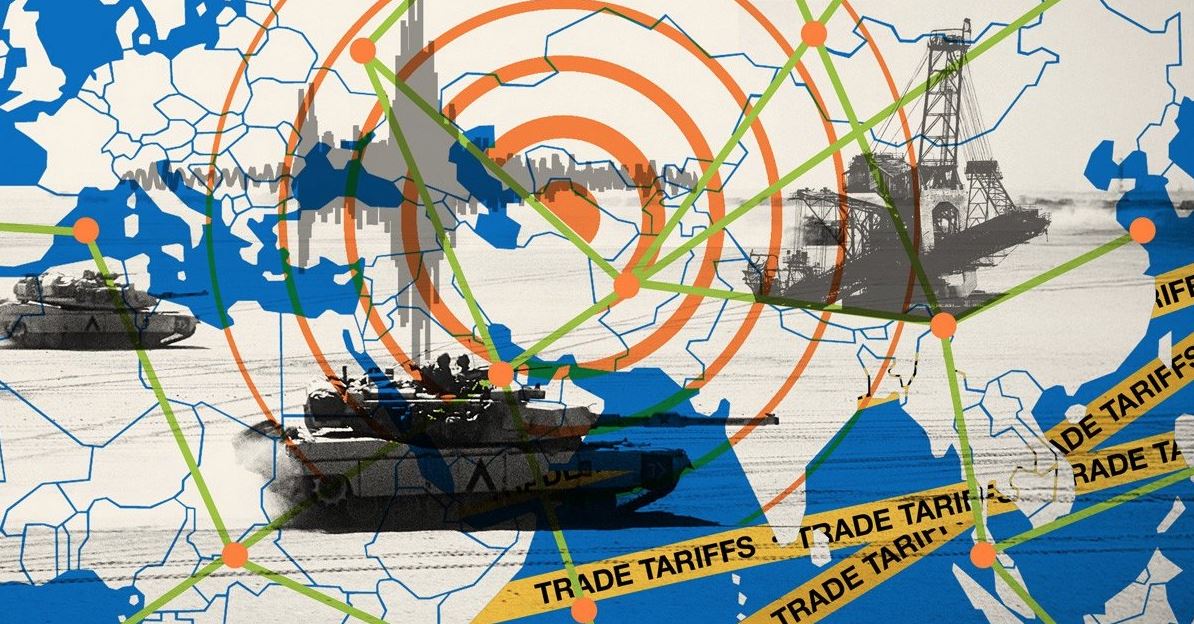
Political Tensions, Strategic Rivalries, and Shifting Alliances Shape the Future of Global Commerce
The Fragile Balance Between Markets and Power
Global trade has always existed in a delicate equilibrium between economic ambition and political control. Nations exchange goods to prosper, yet they compete to dominate the routes, resources, and regulations that sustain commerce. The global trading system, often described as a network of mutual benefit, is in truth a complex arena of influence and strategy. Each tariff, each treaty, and each supply chain reflects not only economic intent but also geopolitical calculation. The twentieth century witnessed an era of integration underpinned by relative stability, yet the twenty-first has introduced volatility as a defining feature. Trade disputes, sanctions, and protectionist policies now emerge as instruments of power rather than last resorts. The global market is no longer neutral ground; it is the stage upon which nations project strength, assert sovereignty, and pursue their vision of order. The fragile balance that sustains commerce depends on cooperation that must constantly compete with the undercurrents of rivalry. Understanding this dynamic requires viewing trade not merely as an economic exchange, but as an expression of global power politics in motion.
The Historical Roots of Geopolitical Trade Tensions
The entanglement of trade and politics is as old as civilization itself. From the Silk Road to the colonial empires, commerce has been both a bridge and a weapon. Nations have long used trade to expand influence, control territories, and secure resources vital to survival. The mercantile policies of early modern Europe demonstrate how trade wars preceded actual wars, as states sought dominance over maritime routes and commodities like spices, silver, and silk. The twentieth century shifted this competition into new arenas, where ideology shaped economic alliances. The Cold War divided the world into competing systems of trade, while the rise of globalization in its aftermath promised integration under liberal economic principles. However, this promise concealed asymmetries. The benefits of open markets favored some while marginalizing others, sowing the seeds of discontent. The reemergence of nationalism, resource scarcity, and technological competition has revived the historical pattern of rivalry. What appears new in today’s geopolitical trade landscape is in fact an ancient rhythm repeating itself, where nations once again weigh prosperity against control and cooperation against fear.
The Strategic Geography of Trade Routes
Geography continues to dictate the flow of commerce, but it also determines vulnerability. Maritime chokepoints such as the Strait of Hormuz, the Suez Canal, and the South China Sea have become symbols of both opportunity and risk. These corridors carry vast volumes of global trade, and any disruption reverberates instantly across markets. Land corridors, pipelines, and digital networks are no less strategic. The expansion of infrastructure projects such as transcontinental railways and fiber-optic cables represents not just connectivity but competition for influence. Nations invest in these routes to secure their position in the global hierarchy, using logistics as leverage. The control of trade corridors now defines modern statecraft. Even in an era of digital commerce, physical geography remains a source of contention. Climate change further complicates this map, opening new Arctic routes while threatening existing coastal infrastructure. The strategic geography of trade underscores a paradox: while the world grows more interconnected, its arteries of exchange remain concentrated in fragile regions where politics and geography intertwine. These chokepoints serve as constant reminders that global prosperity rests on a few narrow straits of stability.
Economic Sanctions and the Weaponization of Commerce
In an age where direct conflict carries immense cost, economic sanctions have become the preferred instrument of geopolitical confrontation. Sanctions allow nations to apply pressure without deploying troops, targeting economies, industries, and individuals alike. Yet, their effectiveness and morality are subjects of fierce debate. While proponents argue that sanctions defend international law and deter aggression, critics contend that they punish populations more than governments. The growing frequency of sanctions reflects a world where trade itself is weaponized. Access to markets, technologies, and currencies has become contingent on political alignment. The dominance of certain financial systems, particularly those controlled by major powers, grants leverage over the global economy. Sanctions not only disrupt targeted nations but also fracture the trust that underpins international commerce. Companies caught in the crossfire must navigate conflicting regulations, risking fines or exclusion. Over time, widespread sanctions may encourage the creation of parallel systems that weaken global cohesion. The weaponization of trade, once an exceptional measure, now threatens to normalize a divided marketplace where economics and ideology collide more openly than ever before.
The Rise of Economic Nationalism and Protectionist Strategies
The global financial crises of recent decades reignited debates about sovereignty and dependency. As nations confronted vulnerabilities in their supply chains, many turned inward, adopting policies designed to shield domestic industries. Economic nationalism, once viewed as a relic of the past, has returned as a political rallying cry. Tariffs, subsidies, and import restrictions have reemerged as tools to restore perceived fairness and autonomy. Yet, these measures often carry unintended consequences. Protectionism may offer short-term relief to local producers, but it also isolates economies and inflates costs for consumers. In the interconnected marketplace, few industries operate without global inputs, making autarky unrealistic. The resurgence of nationalism is less about isolation and more about control, control over who benefits from globalization and who bears its burdens. Governments seek to balance open trade with security, a task complicated by public opinion and geopolitical pressure. The challenge lies in crafting policies that defend national interests without dismantling the frameworks that sustain global prosperity. Economic nationalism, in this sense, reflects the enduring tension between the ideals of cooperation and the instincts of self-preservation.
The Role of Technology in Redefining Trade Risks
Technology has altered the fabric of commerce, but it has also introduced new vulnerabilities. The digitalization of trade enables efficiency, transparency, and reach, yet it exposes economies to cyber threats and data manipulation. Intellectual property theft, supply chain hacking, and digital espionage have become critical concerns for corporations and governments alike. Technological dependence creates strategic asymmetries. Nations that dominate advanced manufacturing, semiconductors, or digital infrastructure wield disproportionate influence. The competition for technological supremacy, exemplified by disputes over 5G networks and semiconductor production, has become a defining feature of modern geopolitics. The once-blurred line between economic and national security now stands sharply drawn. Trade in technology carries strategic implications, and export controls on sensitive innovations have become central to policy debates. The interdependence of global technology ecosystems means that disruptions in one sector can cascade across industries. The future of trade risk management will depend on securing digital infrastructure and fostering trust between technological partners. In an era where data flows rival shipping lanes, cybersecurity has become the new frontier of economic diplomacy.
Emerging Economies and the Shifting Balance of Power
The rise of emerging economies has reconfigured the global trading system. Nations once considered peripheral now play central roles in supply chains, resource production, and consumer demand. This redistribution of economic power challenges established hierarchies and introduces new dynamics of cooperation and competition. Countries like India, Brazil, and Indonesia seek greater influence in trade negotiations, advocating for fairer representation and equitable terms. Regional alliances, such as ASEAN and the African Continental Free Trade Area, demonstrate the collective strength of emerging markets in shaping global policy. Yet, this shift also generates friction. Established powers face pressure to adapt to a multipolar order where economic leadership is no longer concentrated in a few capitals. The transition toward shared influence creates uncertainty as institutions designed for a unipolar world struggle to remain relevant. Emerging economies must navigate their ascent carefully, balancing growth with stability while managing external pressures. Their success will determine whether globalization evolves into a cooperative network or fractures into rival spheres of influence. The rise of new actors signifies not the decline of globalization, but its transformation into a more contested and plural system.
Managing Uncertainty and Building Resilience in Global Trade
In a world defined by volatility, resilience has become the new currency of trade. Corporations and governments alike must anticipate disruption and adapt in real time. Diversification of supply chains, regional manufacturing, and strategic reserves represent key strategies for mitigating geopolitical risk. Transparency and flexibility are now as valuable as cost efficiency. The concept of just-in-time production, once the gold standard of logistics, is giving way to just-in-case preparedness. Risk assessment has expanded beyond financial metrics to include political stability, environmental change, and technological reliability. Cooperation between public and private sectors is essential to strengthen resilience, as no entity can navigate global uncertainty alone. International organizations play a crucial role in promoting dialogue and establishing norms that prevent escalation. However, resilience is not merely defensive; it is also transformative. It encourages innovation, fosters adaptability, and redefines competitiveness. The capacity to endure and evolve amid instability distinguishes successful economies. As trade faces its most complex challenges in generations, resilience offers not a shield against change, but a framework for thriving within it.
The Future of Trade in an Era of Uncertainty
Geopolitical trade risks are not temporary disruptions but enduring features of a world in transition. The balance between cooperation and competition will continue to define the global order. Nations and corporations must learn to operate in a landscape where uncertainty is constant and stability is earned rather than assumed. The evolution of trade will depend on innovation, diplomacy, and the recognition that interdependence is both a strength and a vulnerability. The future of commerce lies in building systems that prioritize trust, transparency, and adaptability. As power shifts and alliances evolve, the essence of trade remains unchanged: the exchange of value that binds humanity together. Yet, the success of that exchange will depend on wisdom as much as ambition. The world’s prosperity now rests not only on markets or materials, but on the shared understanding that progress must coexist with prudence. The future of trade will belong to those who can navigate the shadows of risk without losing sight of the light of opportunity that still shines across the winds of connection.